All posts by dotyness

I'm a mother, a hockey fan, a photographer, a sugar and nicotine addict, a non-smoking smoker, a struggler, a connoisseur of the absurd, a reader, a traveler, a writer, a student of light and shadow, a foodie, a daughter, a sister, a friend, and a crazy cat lady. I talk to myself more than I care to admit and perhaps even more than is healthy. I'm in a time of great change and turmoil so now I'm talking to you as well as to myself.

Just Some Old Lady

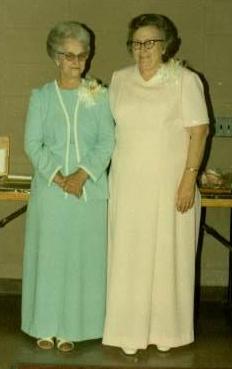
The woman on the left is my cousins' maternal grandmother, Mrs. McCrary. The woman on the right is my grandmother Ruby Carson. She was amazing.
The woman on the left is my cousins’ maternal grandmother, Mrs. McCrary. The woman on the right is my grandmother Ruby Carson. She was amazing.

My grandmothers were amazing women.  I have long said that if I could be half the woman either of them was, I would have really accomplished something.  As amazing as they were and as much adversity as they overcame, you don’t know who they are.

But you know Helen Keller.

Born normal, Helen lost her sight and hearing during an illness as a toddler. Without that horrific event, she would likely have grown into a normal woman who overcame normal things, to live a normal life and leave a normal family.  And she would have been just as anonymous to the world at large as my grandmothers. She would likely have been just some old lady.

Several times recently, I’ve seen this Helen Keller quote on Facebook: “Keep your face to the sunshine and you cannot see the shadow.”

Now, my first thought in response to that quote is (frankly) snarky, centers on the word “see” and you can probably guess what it is.  However, when I yank my head around to being a grown-up again, I think of how remarkable this statement really is.  I may claim to be the Positive Thinking Blog Goddess, but the only reason that title is available is because blogs weren’t around when Helen Keller was alive.

Can you imagine what her life must have been like without sound or sight? I can’t even fathom it. I would think that it was particularly difficult if she had memories of those senses from her early childhood. Regardless, she didn’t just deal with the loss of her senses; she kicked butt.

Her disabilities, her struggles and the people who helped her with them made her a great woman in history. If any piece of that trifecta had been missing, she would have ended up being a totally different person – perhaps an even greater one, but, likely, just somebody’s grandmother. Without blindness, Ray Charles would probably have just been some guy.  With a present father, Bill Clinton might have been just another lawyer. These people turned difficulties into stepping stones.

These past few weeks, I have struggled (and continue to struggle) with some things.  During these times, the temptation to eat like a Labrador is great. Difficulties are real tests of our resolve and of our new coping mechanisms. I cannot say that mine have been successful every time; but, I can say that I’ve actually lost about three pounds. Net effect is that I win. My struggles and issues don’t put me in the realm of those people, surely; but, I’m okay with that.  I don’t need to be a great speaker, musician or politician. I need to be a good human and these present difficulties, as badly as they annoy me, make me better – more compassionate, more patient, more humble.

One day, I will likely be “just some old lady” to most; however, I work every day to become a grandmother worthy of imitation to at least some.
The Matter of Hope

Fair warning – the part of the Positive Thinking Blog Goddess is being played today by Senora Buzzkill.

Aside from helping people solve problems and protect themselves, my favorite part of my job is getting out and meeting all kinds of interesting people. I recently had coffee with the fascinating Kate. During the course of conversation, the subject of Hope arose. Kate shared her theory that Hope is neither created nor destroyed, rather, it is redistributed. Her thoughts captured my imagination, which has just run amok with them ever since.

Within an isolated system (a person) Hope can be neither created nor destroyed, only change form, like both mass and energy. I’m sure this parallel is all kinds of Swiss cheese with logical holes; however, I like the notion of it – the Law of Conservation of Hope.

We were discussing Hope as it relates to coping with cataclysmic loss – of a parent, child, spouse, sibling, friend or in cases of natural disaster. I looked for instances of Hope’s metamorphosis during times of loss for me: my mother’s death after a long bout with cancer and my dear friend’s death in a car wreck.

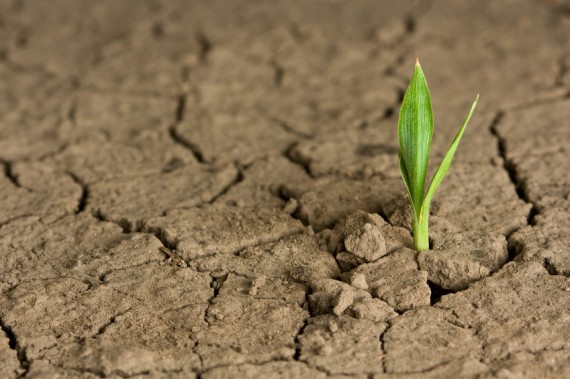
hope-2-570x379I did some research on Mother’s diagnosis of mantle cell lymphoma and found no survival rate for that particular kind of non-Hodgkins lymphoma. My research did not leave room for hope of survival for Mother, only that perhaps she had been misdiagnosed. Even that quickly changed. Hope then centered on handling this correctly – in a way that would be honest with my son (but not gruesome), supportive for my mother and as healthy as possible for the rest of us. Those hopes ended up centered on controlling the collateral damage – people don’t get cancer, families do – and finally hoping that it would all be over soon. (And we’re not even going to discuss the incredible guilt that goes with that!)  Finally, the hope was that I would get my life back. The metamorphoses of Hope in this experience were over 3.5 years.

Joey’s death was much more abrupt. I found out in a 6:30 Monday morning phone call. I hoped Larry was wrong. Then I just hoped that I would remember to breathe again. I hoped that for weeks. Then, I hoped there would come a day when I wouldn’t miss him. Now I hope that it never does. These metamorphoses have continued for 20 years.

Hope is our coping mechanism. It is the thing that gets us through the unbearable as surely as it enhances the joyful.  Even for those we think have lost hope, maybe their’s centers on the hereafter being better than the now. Maybe even then, Hope exists in some form. It is, I think, the genesis of faith.

(Or maybe contemplation of Hope is the path to madness as surely as the effort to define Quality was for the author of Zen and the Art of Motorcycle Maintenance.)

This idea is really intriguing to me; so, I invite you along for a little audience participation today.  What are your thoughts? Share them with us below. (You do have to supply some basic information before your comments are sent to me for approval.  Don’t worry, though, you can give your name as Anonymous. Signing up doesn’t put you on a spam list for me,)

I really would love to hear what you think.

Vegetables and the Lies We Tell About Them

Every day, while driving to work, I see a billboard advertising pediatric care for a local hospital group.  ” You deserve a choice in pediatric care,” it touts, while featuring this photo:

child frowning at brussels sprouts

Clearly, the message is that brussels sprouts are yucky and you ought to have a choice in care that is less hideous than vegetables.

I have tried several times to photograph this offensive advertisement, but have been unsuccessful.  The last time I tried, Waze told me to cut it out and pay attention to the rush hour traffic all around me.  Sounded like a good idea…a good idea that left me without photographic evidence to support my outrage that the MEDICAL COMMUNITY is feeding the myth that children will not like brussels sprouts or perhaps even all vegetables. What an utter crock!  They ought to be ashamed of themselves!

As I’ve already told you, I know that I got really, really lucky with my son.  He was easygoing, food adventurous and just a good child. As a toddler, he ate salsa, all manner of vegetables, pickled herring in cream sauce on crackers, and haggis. (Before you go there, my ancestors are Danes and Scots. We eat things like pickled herring and haggis. It’s a thing.) He really ate anything that couldn’t outrun him.  Except ham. He hated ham and I wore it every time I tried to sneak it past him.

When he would fall down, bump his head or whatever, as long as there was no blood, I would respond with an “oops!” or an “oh! my head!” and play it off.  He would typically just rub the bump and go on his merry way. He had better things to do than lose valuable playing time by howling.

My point in telling you this is: he responded as he thought he should most of the time. He took many of his cues from me and my behavior and reactions. I generally didn’t impose drama or tastes on him and he responded accordingly. Children in Scandinavia eat herring and love it. Children in Korea dig kimchi. Indian children eat food so spicy the aroma alone makes my eyes water. My point is that, in large part, children eat what is available and what their culture tells them is good. There are, of course, those picky eater exceptions and those one-off dislikes (mine are celery and olives). I’m not going to argue that. What I am going to argue is that children don’t like vegetables.

They can understand messages as subliminal as the one on that billboard. They are suspicious of unfamiliar foods – like all of the vegetables that we don’t regularly prepare and eat. They don’t eat vegetables because our advertising and our children’s menus are full of fried nuggets, starchy mac and cheese, pizza rolls, toaster “pastries,” and other sweetened or fried Frankenfoods. With our color, glossy photos – and with our own plates – we are telling them that vegetables are bad.

In my search for the photo above, I also found this one:

child smiling about brussels sprouts

Same child. Same photo shoot. Totally different message.

This is the one the hospital (and we) ought to be living and advocating.

More Monkey Bars Than Chocolate

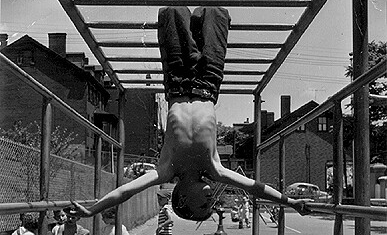
wpid-monkey-bars-over-pavement-21Mama Gump says that,” Life is like a box of chocolates; you never know what you’re gonna get.” As I cleaned my house this weekend (it was still looking like Hoarders – Pre-K), I came to think that perhaps life is also like the monkey bars.

We had a set of those old, straight monkey bars on the playground at St. Francis when I was a kid. I was chubby, slow, awkward and fearful. I was afraid to play on them for fear that I would get hurt, that someone would laugh or look up my skirt. When I finally did try crossing them, I did it slowly, moving one rung at a time.  No so my friend Kelly.  She was fearless! She swung across them gracefully, skipping rungs as she used her momentum to propel her from one side to the other. Shorts beneath her uniform, she would hang upside down, wringing every ounce of joy from the experience as she was suspended there.

On the 12th, I talked about conflicts that eventually claim those who originally claimed them. The same thing is true with anything, don’t you think? We claim a job, a possession, a relationship; but, those things often end up claiming and owning us. A job becomes who I am, not what I do. I insure and guard my possessions. Friendships and romantic relationships can easily become an end in themselves. We end up possessed by things we once called our own. As I sifted through the flotsam of my life this weekend, I saw it in technicolor.

So how do we know when we need to let go of those things? If I had the answer to that, you’d be reading it in my bestselling book or watching me talk about it on reruns of my talk show (I’d be hiking in Scotland somewhere, natch).

Here’s what I do know: when I feel myself becoming someone I don’t like, it’s time to take a hard look.

I’ve had jobs where I felt taken advantage of, taken for granted, underpaid, underappreciated. I became angry stayed that way. I’ve had possessions that made me feel weighted down and panicked over how to protect them. I’ve had friendships and romantic relationships in which I have felt uneasy, unsure, undervalued and overvalued. In all of those cases, I became anxious.

I choose not to live an angry life; so, I had to leave those jobs. Katrina cleaned me out on the possessions once. I’m trying to figure out how to do it voluntarily right this very minute. And I would love to say that I was strong enough to have ended all of those bad relationships myself; however, that would be a big, fat lie. In all of those instances, the change was painful; however, to preserve or become the person I want to be, I had to make them or accept the ones others made. That’s my key – knowing who it is (or isn’t) that I want to be.

As we move through situations that require changes, here’s to knowing when to let go of the last rung and to moving through the rungs fluidly and joyfully.

When the Round Peg Squares Up

So you’ve decided to square your shoulders, lift your head and get healthy.  Everyone you know is going to be supportive, right? Wrong.

square_peg_round_holeThe pretty one. The smart one. The athletic one. The funny one. The fat one.  We all have people in pigeon holes and we all fit in someone else’s cubbies.  It’s kind of a Cosmic Spice Girl thing without the platform shoes. When we Fat Ones decide to climb out of our cubbies, we sometimes meet resistance.

None of us makes the decision to change in an instant.  We gave it a lot of thought before we changed our lifestyles. We got used to the idea internally before we ever floated it out there in the world. By the time we get the idea into action, it’s not new to us anymore; however, to those around us, it may very well be. The aren’t used to it and, frankly, they may not like it.  We are upsetting their cubby system. We are all set to mess up their pegboard.

Fortunately, the wonderful people in our lives will make the adjustment from surprised to supportive to willing to revamp their own pegboards in just moments.  The toxic people in our lives will not. They are the ones who will say things like, “You’re so fat, what does it matter if you miss one day at the gym?” (Someone actually said that to a friend of mine. Can you imagine?) They may say, “What are you doing? Starving yourself again?” (Again, an actual quote.) Those statements are, as my mother would have said, about as helpful as a case of the clap.

I know that it’s unrealistic to remove those kinds of toxic people from our lives 100%. We might want to, but it’s not possible in a social, familial, or professional sense. The keys to handling toxic people, I believe are:

  1. Identify them – knowing what they are and knowing that their toxins are their own issues reduces their power,
  2. Limit exposure to them – if I put myself into a toxic environment – say a room with dangerous levels of carbon monoxide – I must limit the amount of time I spend in that environment else I will be overcome by the poison.  The same thing is absolutely true with toxic people.

We have changed (are changing, are maintaining) our lifestyles so that we can live healthier, more comfortable lives. Our relationships with anyone who doesn’t support us in that quest really need to be examined. How can they not want us to be healthier? How can they not be supportive each time we try, even though we often fail? How can they not want us to continue to strive to live better?

Looking at it another way: what kind of person wants us to continue to poison ourselves or to be in physical pain that is reversible?

I know that it’s not easy and I have honestly never had to do it, but I wonder what the response of the toxic person would be if we countered their derision with, “Exactly why is it that you want me to continue committing suicide with my behavior?” Let’s try it!  C’mon, it’ll be fun.

Listen, ultimately, we have no control over them or their behavior – their trash is their trash. Let’s leave it to them deal with it. Let’s do what is best for us.

Square pegs unite!


A Rough Ride

Theodore RooseveltI’m having a tough time with some things at the moment and, yesterday, failed miserably in dealing with it.  I was down on myself and ate until I literally felt greasy and sick. I went to an Indian Bazaar and got a Picnic bar, a package of dry fruit chikki brittle and a package of puri for bhel. And I ate it all. 1530 calories of nutritionally bankrupt food. Today is a new day and I begin again. Because I need a good pep talk today myself, I’m going to share one of the best I’ve ever read:

It is not the critic who counts; nor the one who points out how the strong person stumbled, or where the doer of a deed could have done better.

The credit belongs to the person who is actually in the arena; whose face is marred by dust and sweat and blood, who strives valiantly; who errs and comes short again and again, because there is no effort without error and shortcoming; who does actually strive to do deeds; who knows the great enthusiasms, the great devotion, spends oneself in a worthy cause; who at the best knows in the end the triumph of high achievement; and who at worst, if he or she fails, at least fails while daring greatly.

Far better it is to dare mighty things, to win glorious triumphs even though checkered by failure, than to rank with those timid spirits who neither enjoy nor suffer much because they live in the gray twilight that knows neither victory nor defeat.

-Theodore Roosevelt

I’m not sure I’m back to Roughrider status today; but, with conscious effort, I will be soon.  I will be strong enough to once again dare mighty things.

Cannoli, Jedi May Be

I know.  Obvious, right?  EVERYbody knows that!

Puh! The lady at the Publix bakery sure did seem surprised when I told her!  (Maybe that was more alarm than surprise.  Hmmm.) You see, the cannoli I wanted were on special – a lower piece price if I bought two.  She was surprised when I still wanted just one. Why would I want just one when, for less than double the price, I could have two? The mind boggles!

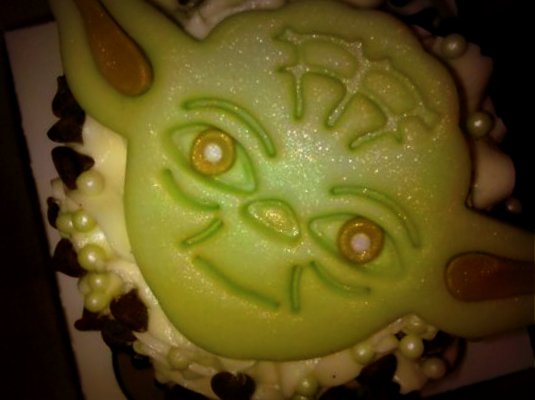
yoda cakeBecause they’re Jedi masters, that’s why!

If I bought two, that would be to eat one now and to eat one “later,” Yeah, right.  In this case, “later” would have been right after I finished licking the crumbs from the first one off my fingers.  Who am I trying to kid here?

As I have previously confessed, I cannot be trusted with sweets or really snacks of any kind.  As a result, I generally don’t buy them for fear of the danger they present in my kitchen.  However, from time to time, I like to pretend that I’m an adult and can handle the responsibility of baked goods.  I choose to take the responsibility slowly and purchase them singly.  That really seems to freak out the people selling them.

I once ordered a single mini-scone at Starbucks.  The kid behind the counter proceeded to tell me how much cheaper they were if I bought three.  I thanked him for the information and repeated my order for one.  His head exploded. Seriously, it was like that scene in Austin Powers when the fembots blow up.  This poor kid didn’t even know how to ring up the sale of a single one.

What’s wrong with us when sufficient is a bad word? Why must I always want more? Why can’t I be content with enough? Because a burgeoning market cannot be sustained that way, missy!  That’s trouble talk right there.

You know what else can’t be sustained that way? A burgeoning belly, that’s what.

If I eat what my great-grandmother would have called “a sufficiency (anything more would be superfluous)” then my body gets what it needs without all of the extra that it doesn’t need. The chief problem with this is that we don’t eat a sufficiency anymore.  I dare say that most of us wouldn’t even recognize it. We eat too fast and too much.  We don’t realize that we are over-full until it’s too late to do anything about it.

Here are a couple of ways I have found to help me define a sufficiency:

  1. When dining out, I either split the entrée with my companion or divide it in half and eat only one half.  I’ve even heard of some people ordering a to-go box right then and putting half of the meal out of sight immediately.
  2. Remove a single serving from the container. Even if the yogurt, ice cream or chocolate container holds only two servings, I am more apt to eat only one serving if I immediately remove it from the package.
  3. Buy cookies, scones or other baked treats in singles pieces or slices. An added benefit here is that you get fresher items.

I don’t have to display impressive feats of will-power at home if I display small feats of control at the grocery store. The cannoli my mind control cannot if I leave it in the case.

Who Is Your Screenwriter?

My mother was in treatment for mantle cell lymphoma for nearly three years before an oncologist told her outright that her disease was terminal.  By that time, the disease and the treatment had left her largely unable to process that information.  After that meeting, I told Dr. Steffens that if Shakespeare was right, that all the world’s a stage and we are merely players, then he should look into a new screenwriter because he had seriously crappy lines. However, I appreciated his courage in delivering them.

For years, I had a truly abysmal internal dialogue.  The script inside my mind was unhealthy, destructive, and (I thought) permanent.  Guess what.  I was wrong on that last thing.  Whew!  Right?

movie-clapper-board-mdIt turns out that I can be my own screenwriter!  Or, at the very least, I get to write my own dialogue.  I don’t always get a say in what situations I find myself; however, I do get a say in my own responses. Last week we were doing some training at work.  In the middle of my bit, I panicked and choked.  I mean, completely choked.  I forgot what I was supposed to do.  On the stage of my life, I forgot my lines. As it turns out, I’m also my director and, boy! did I give myself what-for for flubbing my lines!

But, wait!  That’s the problem, isn’t it – that I give myself what-for when I flub anything – my lines, my dinner, whatever.  Two years into this and I still speak to myself in ways that I would never speak to another or in ways that I would never allow someone to speak to my son.  So, why do I continue to do it?

I am happy to report that, although the struggle continues, it is less constant than before – which is great because, frankly, it’s just exhausting to police and eliminate that kind of language and attitude.  While it is frustrating that I still struggle, it is encouraging that I struggle less than I did two years ago. Just as with diet, baby steps in the right direction in attitude are progress.

This week, as I work through some course corrections, successes, failures, some undefined and some unrealized expectations, the temptation is strong to lapse back into the unhealthy script and its attendant unhealthy eating. Last week, I ate too few vegetables and too little overall. As a result, I was exhausted, cold, and mentally weak.  Over the weekend, however, I prepared some nutritious meals that I can quickly warm up when I get home in the evenings.  In addition, I reached out to my local support group, making me stronger this week.

You see, my play has a heroine (me), a villain (a rotating role), a couple of dogs, waaaaay too many cats and a massive supporting cast who are kind enough to write me into their plays, as well.

I may be my own screenwriter; but, my play is far from a one-woman show.

Protein – the Latest MadLib

Sound the alarm! You’re not getting enough protein! Well, if you watch the ads on TV these days, you’ll probably think that you’re not.  After all, every food under the sun is trumpeting its protein content.  (Well, except for kettle corn. As previously established, kettle corn is a gift from the gods and is, therefore, exempt from all dietary claims and requirements.) High protein snack bars, high protein yogurt, high protein cereals are all in league to make us think that our protein intake is too low, that we would be healthier if only we ate more of it!

Here’s the scoop: according to the CDC, the average adult female needs 46 grams of protein daily.  The average adult male needs 56 grams.  The National Center for Health Statistics says that the average adult female consumes 70.1 grams of protein daily, while the average adult male wolfs down 101.9 grams. So, um, yeah.  You’re probably getting enough.

So, why all the hype about protein the last few years?

The Adkins Diet was phenomenally successful – high protein, low carb.  Madison Avenue marketed the whole “low carb” thing so pervasively that we as consumers didn’t even see it anymore.  They had to use something new to grab our attention.  And, voilà! High protein everything hit the shelves.

Collins River CowWe like new things.  We want the latest phone, the greatest tablet, the most modern car and the trendiest diet.  The Mad Men know this.  They study us. They probe us. They poll us. They monitor our behavior.  I’m pretty sure that’s where the beings from Roswell ended up – in a suit and tie, probing us via our loyalty cards.  They know more about us and our purchasing behavior that we do. Statistically, they can manipulate us by using the laws of large numbers – they exert a little pressure here, we buy gummie vitamins for adults, a little pressure there and we buy frozen PB&Js. They pull a little there and we’re spending millions to clothe and amuse our cats who grow their own fur coats and who will play for hours in a cardboard box.

All of this hype and nonsense has lead to the unhealthiest American population. Ever. We are overweight, under exerted, overstressed, undernourished, diabetic, cancerous, depressed, agitated, infertile and angry in record percentages. It’s time for us to realize that the advertisements are not our friends. They are not giving us friendly advice.  They are trying to sell us something. They imply that our purchase of the Something will make us prettier, smarter, sexier, more successful and have better hair.  But, the truth is, our purchase of that Something is more likely to do all of those things for the person who came up with the ad campaign than it is for us.

Human chemistry just hasn’t changed that much.  We don’t need some new formula, packaging or buzzword.  We need basic nutrients delivered in or near their natural state. Period.

(And kettle corn.)

Former Fat Chick Makes Good

Okay, so I’m totally going to share this even if it sounds incredibly self-serving.  I share it because it’s a lottery moment, an I-never-thought-that-would-happen-to-me event.

I went to a networking thing last night.  It was a wine-tasting and, because I’d never been to one and didn’t want to look like country comes to town, I went home and changed into an almost cocktail dress before I went to the event.  When I got there, I was WAY overdressed; but, I like the dress, I liked the people there that I’d already met and I was ready to have a little wine and a good time.  I relaxed and began to enjoy myself.

Sitting next to Shelley, who has a wicked sense of humor, I was rolling the entire time!  After the formal part of the event was done, several of us were standing around chatting. Of course, I brought up my blog (since it’s kind of my baby and all) and a woman I had just met said the funniest thing to me!

OLYMPUS DIGITAL CAMERAY’all ain’t gon’ believe this.

Now, in the South, that sentence usually means that you’re about to hear a story of alien abduction, Aunt Elma’s ghost or some coon dog with supernatural powers.  Not today, friends.  Today, that sentence leads into my very own don’t-hate-me-because-I’m-beautiful story.

While we were chatting, Anita said that she had been all set to dislike me when I walked in on account of I was overdressed and on account of my overdress is pretty flattering. I was THAT woman!  For the first time in my life, I was her!  While we talked she was all like, “Girl, you are wearing the hell out of that dress.” And I was all like, “Girl, you don’t even know! Lemme show you when I was a jumbo-tron.”

Alright, so we’re not 14 and it didn’t go exactly like that, but, at 46 years old, that is exactly how I felt.  I felt like the pretty girl at the dance and, I’m not gonna lie, it was amazing!

Throughout my life, I’ve been fortunate enough to have people who were kind to me and who said uplifting things.  For a multitude of reasons, I didn’t believe them.  I saw only my own shortcomings, faults and less-thans. As Vivian Ward says in Pretty Woman, “The bad stuff is easier to believe.”

In the Deep South, we are reared to NOT toot our own horns.  We are NOT to be proud or vain.  Somehow we’ve taken that too far.  I felt like I looked pretty last night and other people thought so, too.  And, let me tell you: it was pretty freaking awesome.

As most things are, there is a fine line between giving myself appropriate credit and being proud, vain or a braggart.  I’m not sure where that line is and when I find it, I’ll let you know.  However, in the meantime, I’ll give myself a little more credit and enjoy that feeling.  This isn’t ultimately about weight loss: it is ultimately about being healthy.  If healthful choices result in some weight loss and if that weight loss results in increased confidence, then both body and mind benefit.

Plus, it’s such a rush to have that moment.  Even if I never have another, it was fantastic and totally worth the work!